

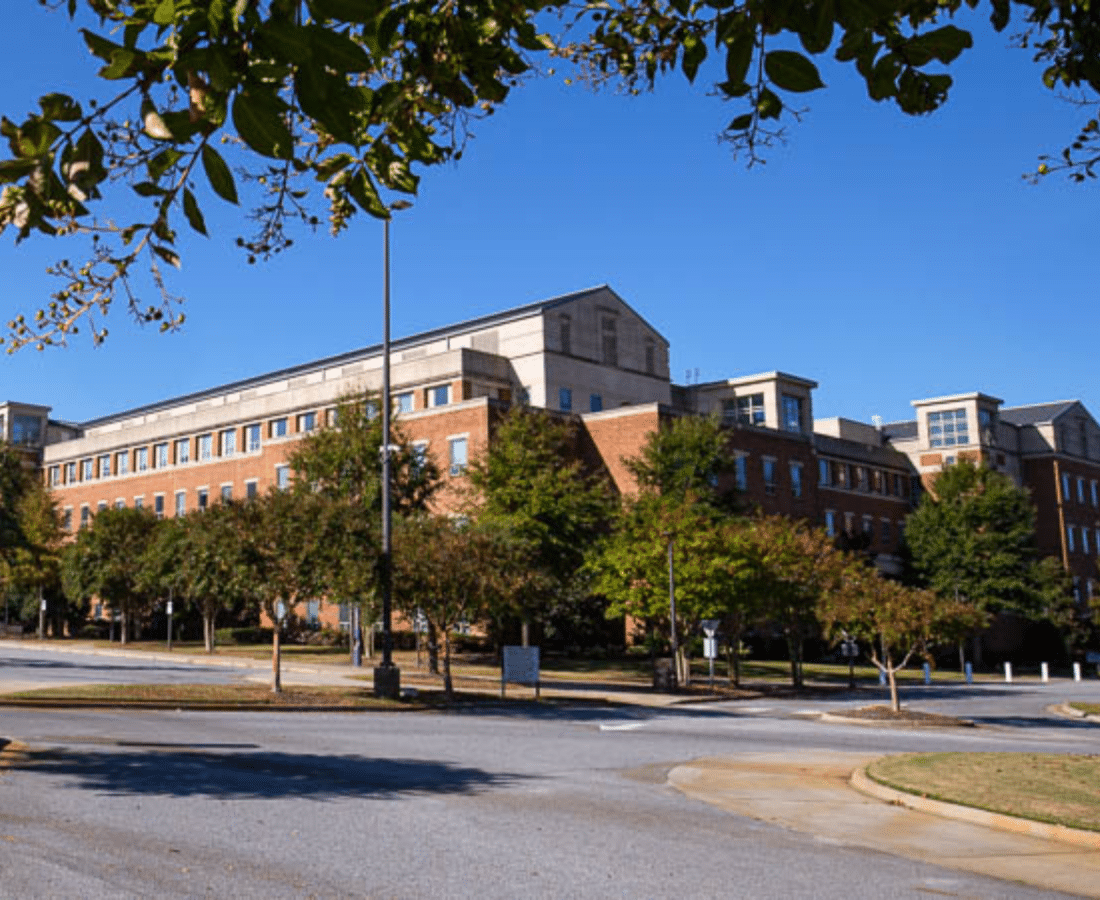
A program at the Brody School of Medicine at East Carolina University that prepares high achieving medical students to make a tangible impact on health care in eastern North Carolina and beyond will expand thanks to the generosity of the family that has championed medical education across the region for nearly 50 years.
David and Laura Brody of Raleigh, and Hyman and Stacy Brody of Greenville’s transformational $10 million gift will allow the Brody Scholars Program at the Brody School of Medicine at ECU to expand. It coincides with the looming completion of the newly named Brody Center for Medical Education, which is expected to open in the 2027-28 academic year.
The family’s gift was announced in March by East Carolina University and ECU Health Foundation. The family’s name will now grace the upcoming Brody Center for Medical Education in honor of their generosity.
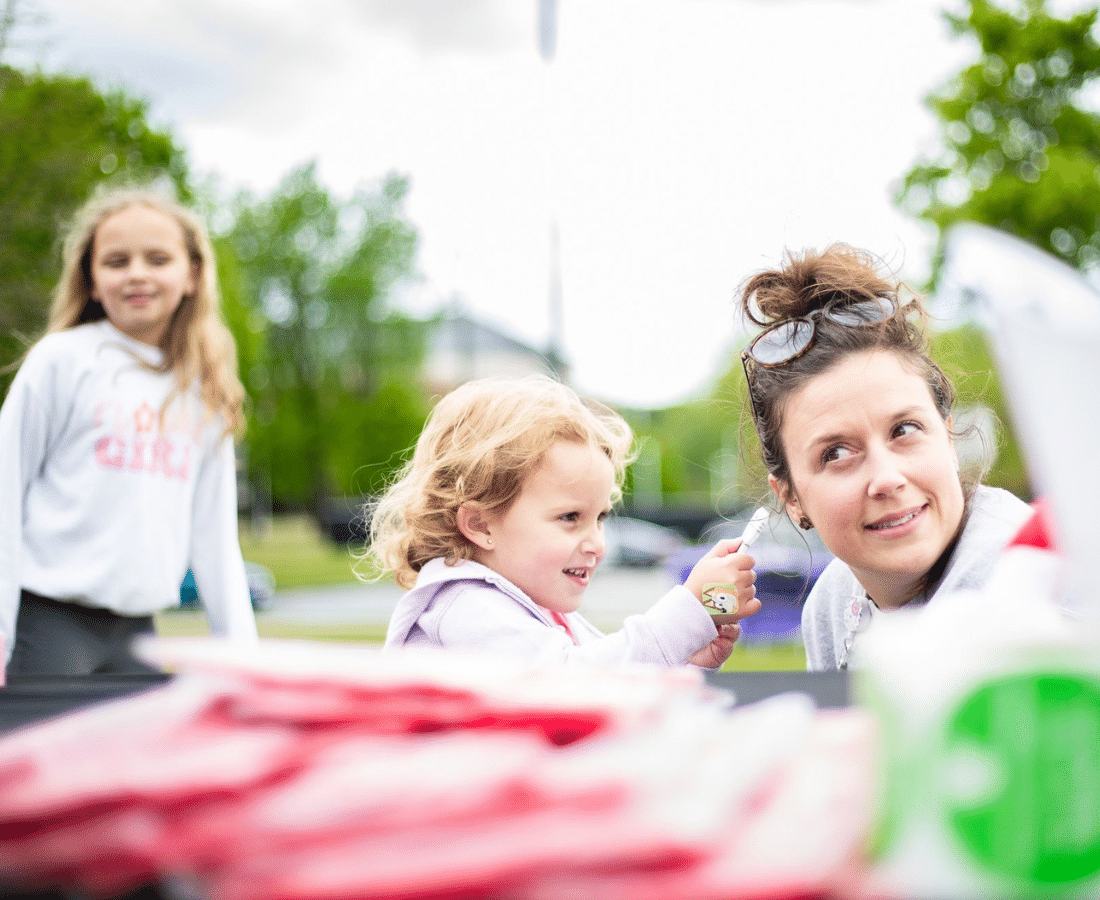
Pirates vs. Cancer, a student‑driven initiative dedicated to supporting children and families facing cancer, is set to host its annual spring fundraising event on April 10 at the ECU Health Sciences Campus. Led by medical, dental and allied health students, Pirates vs. Cancer brings together the entire health sciences community for a day of giving, celebration and solidarity with pediatric patients.
One hundred percent of the funds raised by Pirates vs. Cancer is donated to ECU Health Foundation to benefit programs at the James and Connie Maynard Children’s Hospital at ECU Health Medical Center. Some of those programs have included camps and other programs specifically designed to provide pediatric patients with childhood experiences.
Among the most tangible examples of the group’s efforts is on the Maynard Children’s Hospital’s second floor. In 2024, Pirates vs. Cancer funds were designated to renovate a playroom and fill it with toys, games, crafts and technology that help patients take their mind off procedures and just be kids.
“We were able to almost double the size of this playroom for these kids and add so many more interactive features,” said Elise Ironmonger, director of programs at the ECU Health Foundation. “It’s really a place of respite for them when they are facing treatment for months, weeks at a time.”
Pirates Vs. Cancer was founded by Brody School of Medicine students in 2017 and has raised over $176,000 in the past 10 years. Leadership and participants are composed of students, faculty and staff from the School of Medicine, School of Dental Medicine, College of Nursing, College of Allied Health Sciences and the Undergraduate campus. Together, they raise funds that directly impact their community.
To support Pirates Vs. Cancer, please click here.
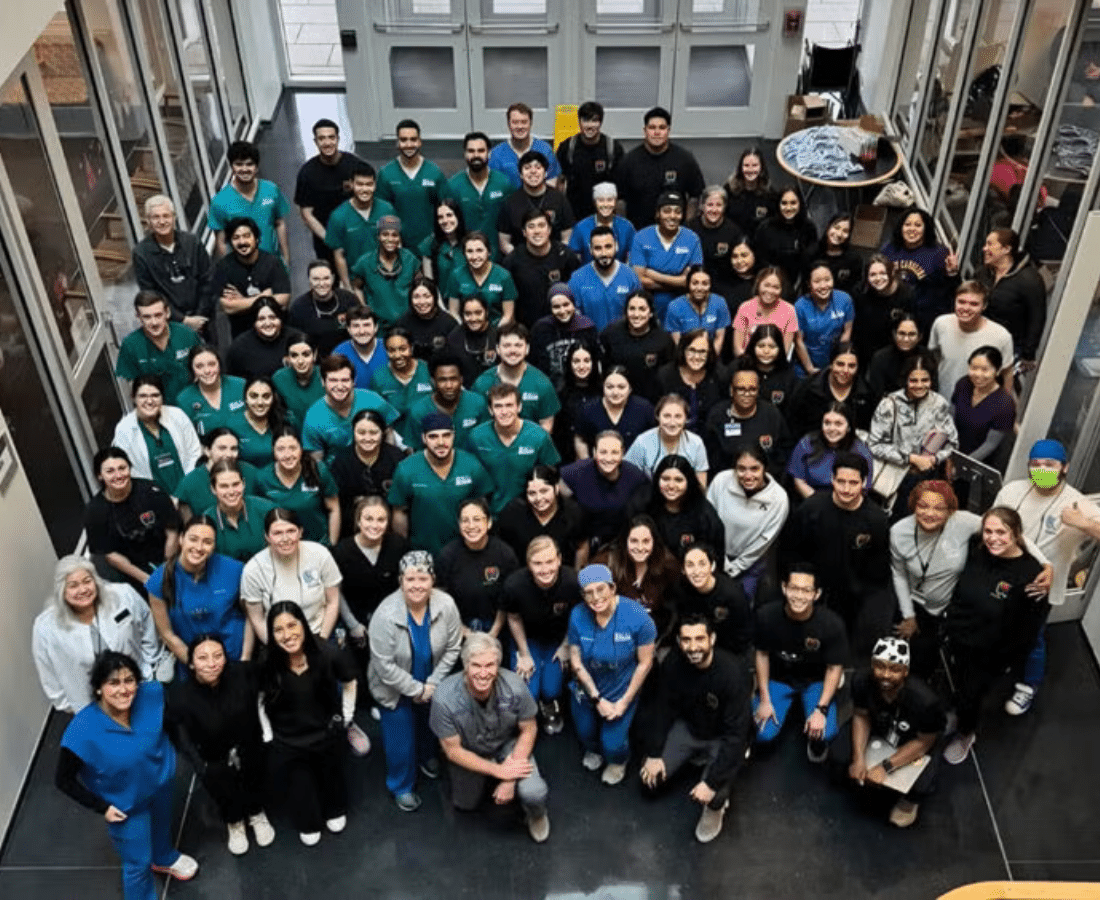
The sixth annual Sonríe Clinic in Ross Hall breathed new life into a special event created through a labor of love.
The student-led event, headed up by the school’s chapter of the Hispanic Student Dental Association (HSDA) and its president, Brooke Holmes, provided care in February for 80 patients — adding up to $35,000 worth of care.
The Sonríe Clinic, which was created by dental students in 2021, provides oral health care at no cost to members of the Hispanic community who have been screened in advance. This year’s event was also sponsored by the North Carolina Dental Society Foundation.

The Grace Marie Hudson Brown Memorial Patient Care Fund is more than a pathway for supporters of the East Carolina University School of Dental Medicine to aid patient care — it’s also an act of love through service.
The endowed fund was created by Dr. Benjamin Brown, a longtime North Carolina endodontist, to honor his late wife — they were married for 61 years — and to support oral health care for patients of the school’s offices and community service learning centers across North Carolina.
“I wanted to honor her in a way that carries her name, while supporting the school and its mission to provide care for people across the state and producing new dentists who are also from North Carolina,” Brown said.
Following a decades-long career in dentistry, Brown is proud that many members of his family have followed his career path, making their own mark in the profession and helping countless patients reveal their brightest, healthiest smiles. His granddaughter, Lucy Anna Sheaffer, just began her second year at the ECU School of Dental Medicine.
Read more about the Sheaffer family and their hope for the endowed Grace Marie Hudson Brown Memorial Patient Care Fund here.
You can support the fund here.
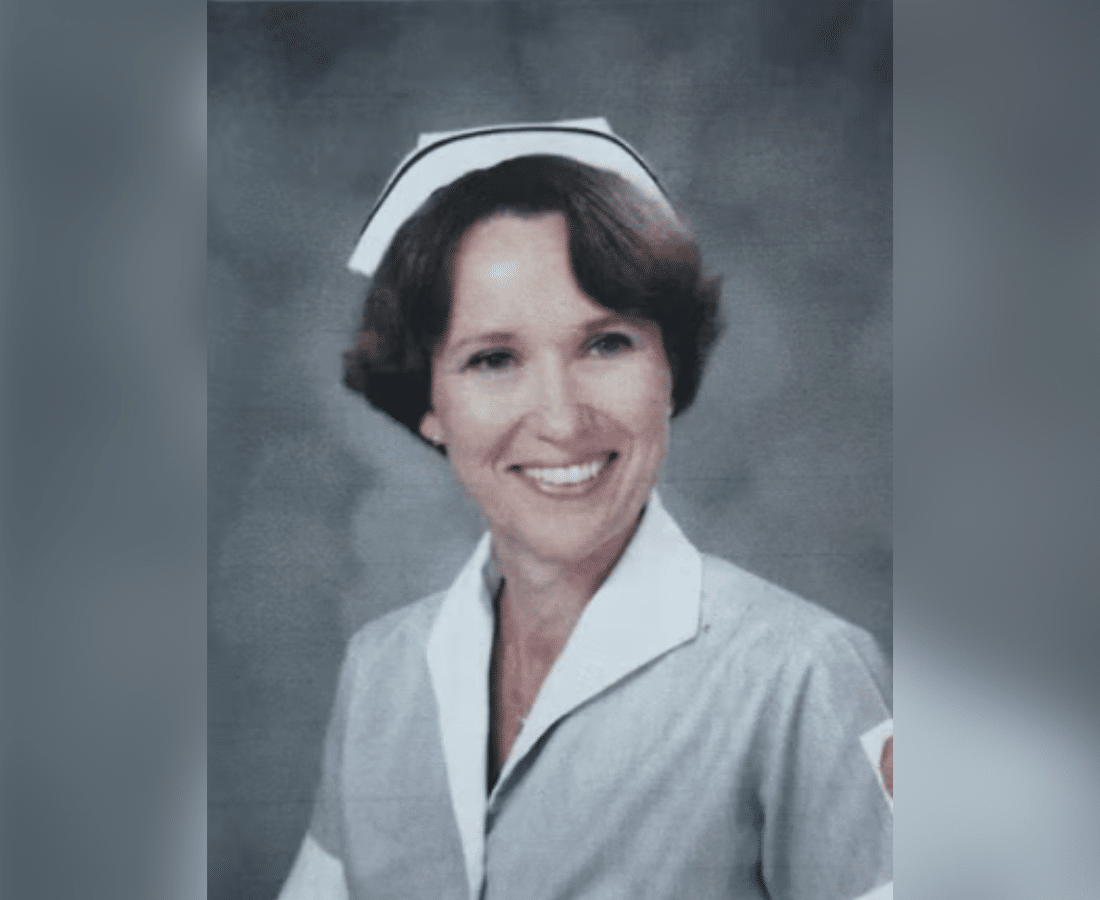
Donors like Atticus Fisher understand the life-changing impact of nurses because he saw it firsthand in his mother, Mary Lou Fisher, whose compassion and skill touched lives across the globe.
Mary Lou Schulz Fisher graduated with a Bachelor of Science in nursing from East Carolina University in 1985, and went on to live a full life as a successful travel nurse.
Mary Lou’s excellence caught the attention of President Jimmy Carter, who invited her to join a medical mission to Costa Rica. Inspired following the trip, she continued her education to earn a Master of Science in Nursing, which opened doors for her to serve internationally with Samaritan’s Purse. Through this work, she cared for people in need around the world.
Mary Lou passed away in 2016, but her legacy of compassion continues. To honor her lifelong commitment to caring for others, the Fisher family established the Mary Lou Schulz Fisher Scholarship at ECU, the place where her nursing journey began. To date, the scholarship has provided $1,000 awards to five students.
“As a senior pursuing a BSN degree, this scholarship will significantly help ease the financial burden of my education. The Fisher family’s support allows me to focus more on my academic and career goals without the much-added stress of finances,” said Haley Gipson, a recipient of the Mary Lou Schulz Fisher scholarship. “Not only that, but it encourages and motivates me to work hard and make the most of the opportunities that have been provided to me, just like Mary Lou Fisher did herself. I hope that one day I will be as inspirational as her.”
Sarah Swain, executive director of Health Sciences Philanthropy with the ECU Health Foundation, said creating a scholarship is a powerful way to honor a loved one’s legacy.
“We’re deeply grateful to families like the Fishers who understand the impact of an ECU education and are committed to transforming the lives of our students — both now and for generations to come,” Swain said.
To learn more about supporting College of Nursing students through an academic scholarship or to make a gift, contact Swain at 252-847-5874.
Donors have embraced East Carolina University’s priority fundraising focus to further initiatives like scholarships and research, contributing nearly $74.4 million in philanthropic support, according to a fiscal year-end wrap-up of 2024-25.
The fundraising total includes $23.2 million – through the ECU Health Foundation – for health sciences and health care priorities.
Notable fiscal year giving included $2 million from the Bedford Falls Foundation-DAF to create a scholarship program in the College of Nursing. The five-year partnership launches a first-of-its-kind initiative at ECU to establish a medic-to-nurse pathway that will bring military medics through the accelerated Bachelor of Science program in the College of Nursing.
Also of note is a three-year, $593,000 grant from Dogwood Health Trust that invests more than $85,000 in Patient Care Funds for the School of Dental Medicine and more than $425,000 in salary support for existing and additional positions at the Sylva and Spruce Pine Community Service Learning Centers (CSLC). The grant will ensure that more uninsured individuals receive services and allow the CSLCs to provide competitive salaries in hiring clinical staff and practice management positions.
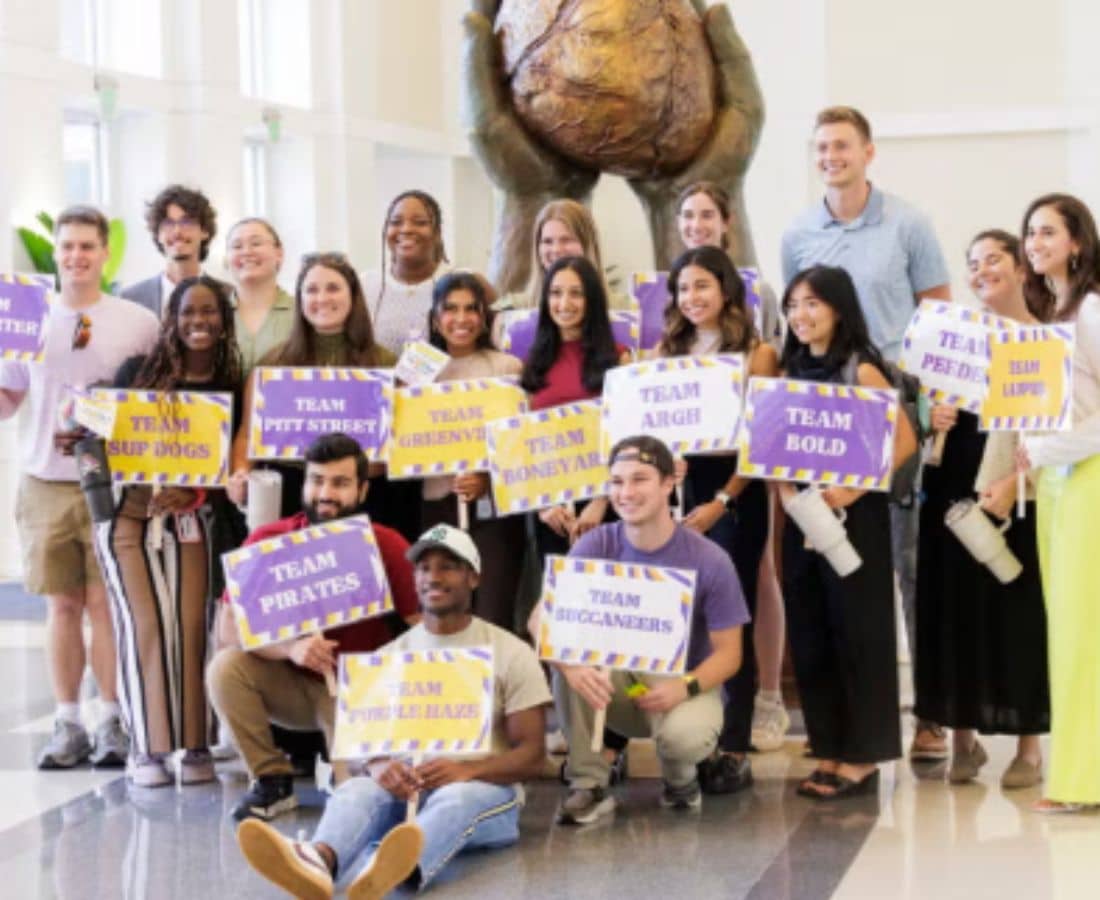
Brody School of Medicine at East Carolina University held orientation week for new residents, officially welcoming the Class of 2029. The week included a lecture and luncheon was funded by the Albernaz family endowment. The entire week was laced with food, treats and programming made possible by gifts from alumni and donors to the Brody Loyalty Fund, maintained by the ECU Health Foundation.
The Brody Scholars program, created in 1983 with gifts from the Brody family and the Brody Foundation, is a merit award that pays for tuition over four years, most living expenses and $5,000 for travel. Only three incoming students get it.
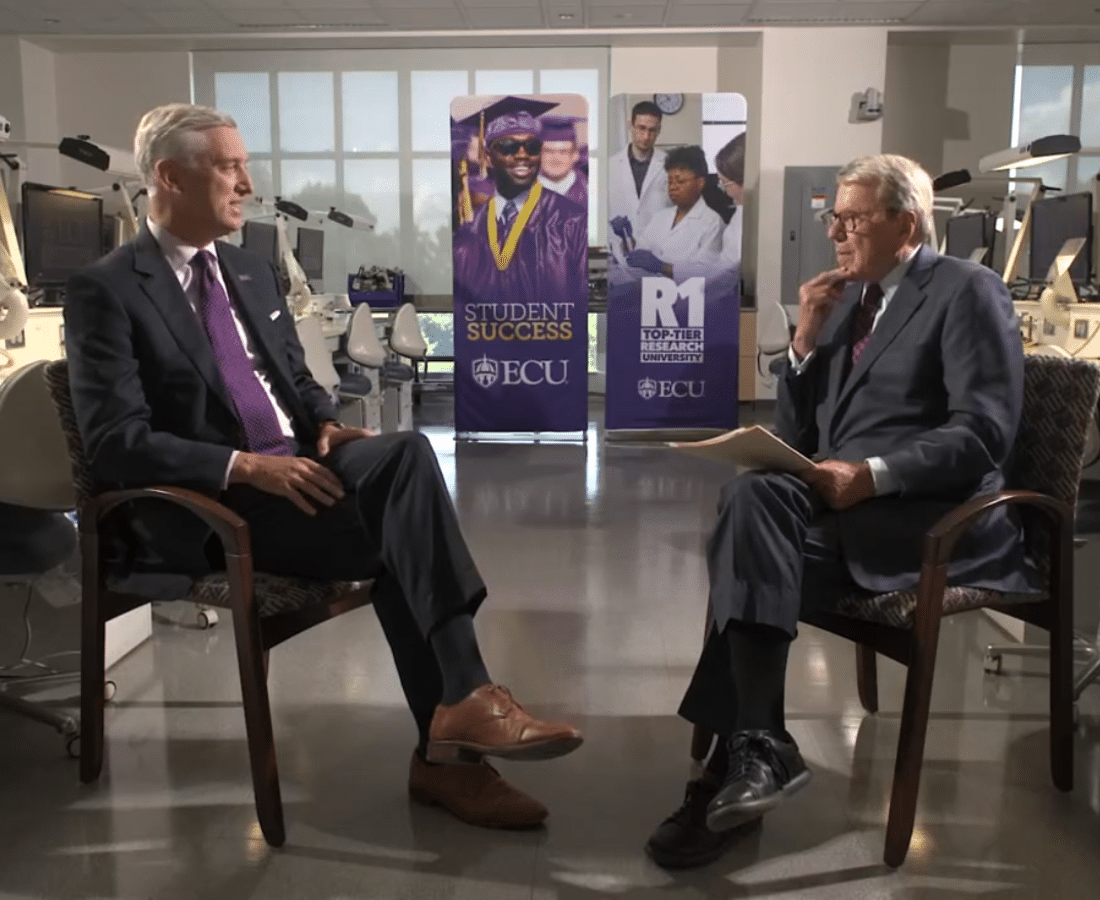
Dr. Philip Rogers, chancellor of East Carolina University, talks with PBS NC’s David Crabtree about leading the university, adding the School of Dental Medicine and how the university is growing.
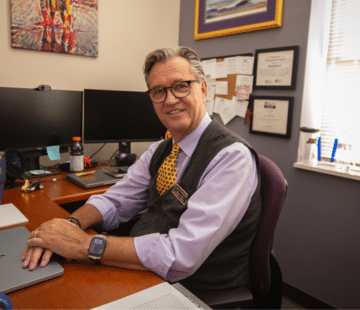
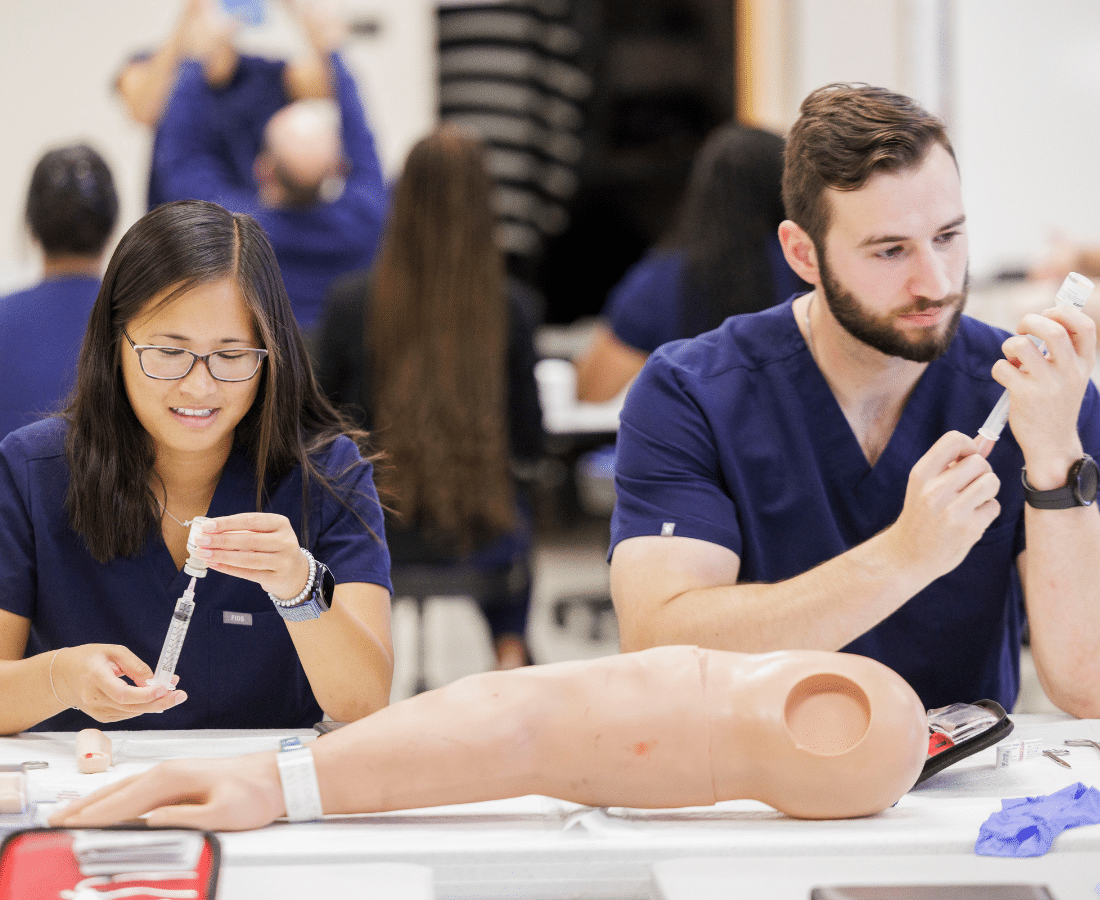
A generous gift from the Bedford Falls Foundation-DAF, through the ECU Health Foundation, will launch a first-of-its-kind initiative at East Carolina University to establish a medic-to-nurse pathway that will bring military medics through the accelerated Bachelor of Science program in the College of Nursing.
The five-year, $2 million partnership strengthens the relationship between ECU and the military and will bridge the transition between active military service and careers in community health care.

In mid-2022 Dr. Swati Surkar, assistant professor of physical therapy at the College of Allied Health Sciences and the study’s director, began researching the applicability of Hand-Arm Bimanual Intensive Training, or HABIT, in children with unilateral cerebral palsy.
The technique involves inducing ischemia, or the restriction of blood flow, to part of a person’s arm and then having the person perform a series of tasks once the blood flow resumes normally. In past studies, HABIT interventions had proven effective in improving coordination, but little research had been conducted to assess its effectiveness in improving and retaining real-world bimanual activities and hand function.
Over the past two years, Surkar and a team of student volunteers from a wide range of majors and research interests have held HABIT camps for children mostly from North Carolina, but from as far away as Florida, New Hampshire and even Mexico.
During the camps, the children were fitted with watch-like monitors that were worn on both wrists and captured an incredible amount of data about how their hands and arms moved —including range of motion and speed — during the intensive therapy. After the ischemia was induced through a blood pressure cuff, the children would stack cups, throw balls or move through obstacle courses that demanded a lot of effort from both arms.
Her research is showing very promising results.