
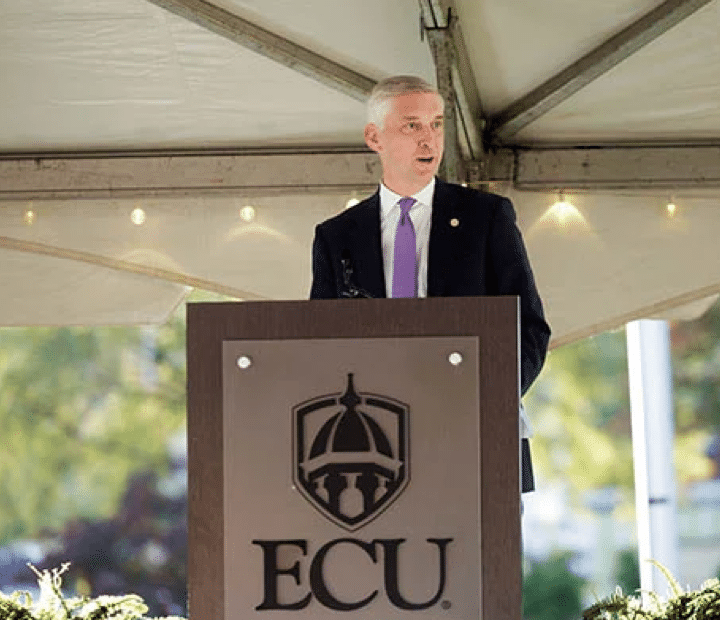
East Carolina University leaders broke ground Thursday on a planned seven-story, 195,000-square-foot Center for Medical Education Building financed by the state of North Carolina. The project promises to make space for much larger incoming classes by the end of the decade. It is financed with $265 million from the state of North Carolina.
The groundbreaking took place during the two-day meeting of the ECU Board of Trustees. Remarks were made by ECU Chancellor Philip G. Rogers and Dr. Michael Waldrum, dean of the medical school and CEO of ECU Health, along with University of North Carolina System President Peter Hans and fourth-year medical school student Shantell McLaggan.
Years in the planning, the project moved closer to reality in 2021 when the North Carolina legislature approved and the governor signed into law a state budget that earmarked $265 million for the new center.
The chancellor thanked state leaders, members of the ECU Board of Trustees and the UNC System, Brody School and ECU Health leadership and department chairs, alumni and donors, faculty and students. He also thanked the design team and construction contractors and said the day was a celebration of the start of a journey that will impact countless families in eastern North Carolina and beyond.
“There is a shortage of primary care doctors in our country that’s acute for rural Americans. East Carolina University stands in the breach, training today’s medical students who will choose to practice primary care in underserved areas tomorrow,” said Rogers. “We thank our state’s elected leaders and the people of North Carolina for their trust in our commitment to improve rural health and well-being. We pledge to steward this public investment in service of our medical students – the next generation of highly trained physicians giving patients throughout our state life-saving help and hope.”
Last year, the president of the American Medical Association spoke out against the nationwide physician shortage that’s left more than 83 million people in the U.S. without sufficient access to a primary care physician. Rural communities are hit hardest.
The Brody School of Medicine is among the nation’s top schools for graduates who choose to practice primary care in medically underserved areas in the state. It is No. 2 in the nation for graduates who choose to practice family medicine.
“The Brody School of Medicine and ECU Health have a great culture, which is foundational to our important rural mission,” said Waldrum. “The Center for Medical Education Building will directly support the mission by providing a state-of-the-art environment in which medical students can train right here in one of the largest rural regions in the nation. It is incredibly exciting to know we will have a modern facility intentionally designed to ensure our students, faculty and staff can continue to benefit from a high-quality medical education experience that supports them and our state.”
When it opens in 2027, the Center for Medical Education Building will provide state-of-the-art classrooms, anatomy labs and simulation technology integrated with flexible spaces, collaboration rooms, small group student spaces and green infrastructure. Sections of the building will be designed as living rooms for four blended cohorts of medical school students. Common spaces will serve as a “home” for students to study, gather and recharge.
“This facility is 100% designed with students in mind,” said Dr. Jason Higginson, the school’s executive dean. “Recruiting the most promising future doctors means pledging the highest quality medical education and facilities. We see that pledge coming to life here in these renderings.”
“Medical school is so rigorous. Success depends both on labs and hands-on learning environments along with quiet and comfortable spaces that host hours and hours of quiet study. Our students need all of it before they begin treating patients in clinical settings. They have it here at the Brody School of Medicine.”
In more than a half century of training eastern North Carolina physicians, ECU has bestowed more than 3,500 degrees in medicine. Expansion will allow the school to admit more incoming students – from fewer than 100 this year to as many as 120 after expansion.
Construction will begin at the northeast corner of the medical school footprint starting in March. The Center for Medical Education Building will open during the 2027-2028 academic year.
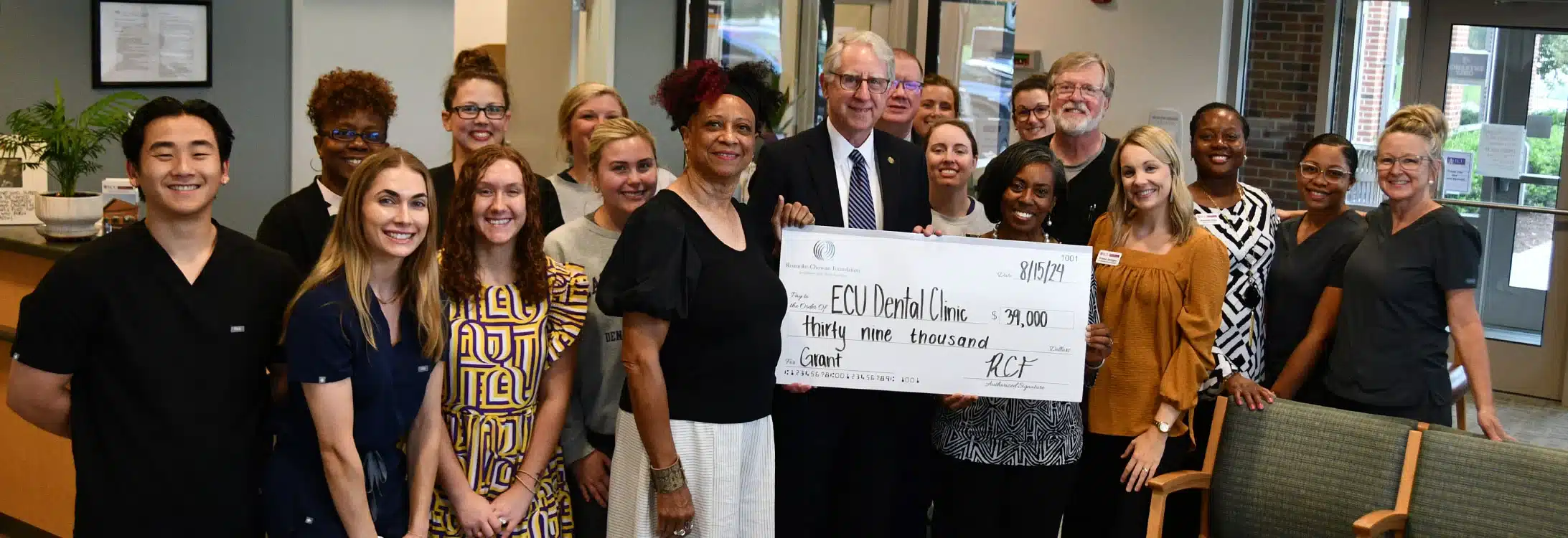
Dental health capabilities got a boost at East Carolina University School of Dental Medicine’s community service learning center (CSLC) in Ahoskie through a gift from the Roanoke Chowan Foundation (RCF).
The first-time $39,000 gift from RCF – through the ECU Health Foundation – has allowed the school to secure equipment and resources to offer moderate sedation at the CSLC. Additionally, funds will be used to purchase a new Primescan Connect camera, which will update digital dentistry capabilities, and for nitrous carts, to help with care for pediatric patients.
“This state-of-the-art equipment provides our students and residents with vital exposure to digital dentistry,” said Dr. Greg Chadwick, dean. “This equipment also will help keep patients out of the local hospital operating room for dental surgery, while providing excellent educational opportunities for our students and residents.”
The alignment of ECU’s medical and health sciences and ECU Health helped establish a new relationship with RCF. ECU Health Roanoke Chowan Hospital is one of the health system’s nine hospitals. The foundation became an independent entity from the hospital after alignment.
“Our foundation has a long partnership of supporting the Ahoskie dental clinic through the Roanoke-Chowan Community Health Clinic. The alignment with ECU Health and the ECU Health Foundation provided an opportunity to grow our assistance by giving to the School of Dental Medicine directly,” said Wendy Vann, with RCF. “The school, in turn, can enhance the services they are able to provide in our community.”
Since 1985, the foundation has provided more than $17 million to address health and wellness in the Roanoke-Chowan area, including Bertie, Gates, Halifax and Hertford counties.
Roanoke Chowan Foundation’s gift for the Ahoskie CSLC was made to the ECU Health Foundation, the philanthropic arm supporting ECU Health and ECU’s health sciences campus.
“This gift, supporting the Ahoskie CSLC, highlights the alignment of the health system with the region we serve and our shared purpose to improve the overall health, education and well-being of eastern North Carolina,” said Scott Senatore, Chief Philanthropy Officer, ECU Health Foundation. “The Roanoke Chowan Foundation is a dedicated community partner, and we appreciate their commitment to the CSLC in Ahoskie.”
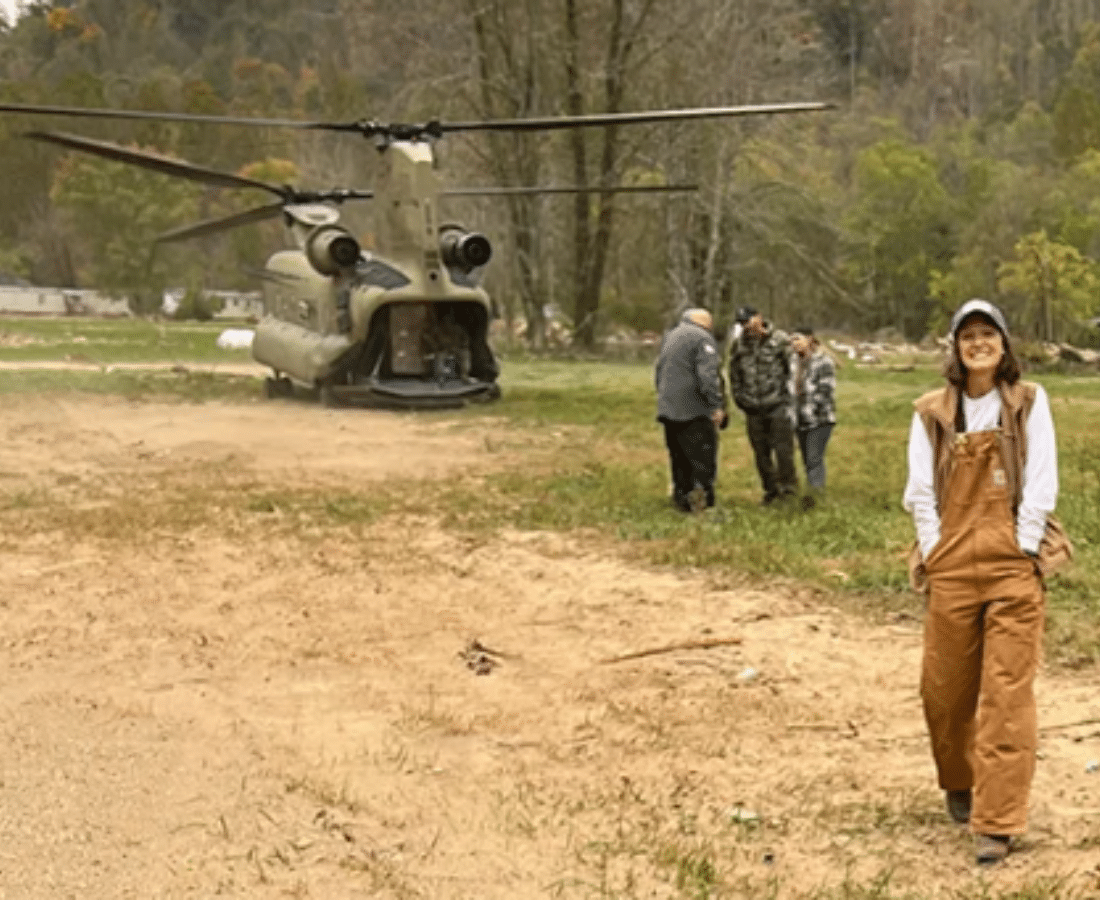
When Hurricane Helene rolled into western North Carolina in late September, Pirate nurses — from the mountains to the coast — dropped what they were doing and rushed to storm-ravaged western North Carolina to do what Pirates do best — provide service to those in need with the critical skills they had learned at East Carolina University.

Days after Hurricane Helene delivered devastation to western North Carolina, Dr. Jonathan Austin answered a phone call — and made good on a promise he made years earlier to serve his community and state.
Austin — a Lincolnton native and 2016 graduate of the East Carolina University School of Dental Medicine — loaded his Piper Arrow plane with much-needed supplies and took off for some of the most hard-hit areas after the storm. Austin’s plane skimmed the clear air above the stricken region, through mist and clouds that soon revealed rivers, lakes and streams swollen beyond their banks. He saw the unrecognizable wreckage of towns and communities and smears of red clay chewed from the mountains by mudslides. But when the wheels of the plane touched down at small regional airports, Austin was met with open hearts and hands, grateful and compassionate people ready to help their communities rebuild.
During his numerous trips delivering supplies, Austin observed the beauty and breaking point of nature — but he also witnessed the strength and spirit of humanity. When he received a phone call imploring him to help deliver post-storm supplies to the damaged region, Austin, who practices at Austin Dentistry in Lincolnton, didn’t hesitate. He first flew into the Jackson County Airport near Sylva on the evening of Sept. 29 and made several more trips during the days following the hurricane, carrying in-demand items from food and distilled water to diapers, insulin and manual breast-milk pumps.
Austin balanced those flights with continuing to provide oral health care to his patients — using his education and life experiences from dental school, the military and dental practice to touch the lives of people whose paths he crossed in the storm’s aftermath. “You know, everybody was kind of helping everybody, and everybody was asking about everybody,” Austin said of the supply flight experience. “There’s people that I think I will probably talk to for the rest of our lives.” Answering the call came naturally to Austin.
A 2004 graduate of West Lincoln High School, he attended Appalachian State University for a time before enlisting in the U.S. Marine Corps and serving two deployments in Iraq. He returned to Appalachian State and earned a bachelor’s degree in cell and molecular biology with a minor in chemistry. After earning his Doctor of Dental Medicine degree from ECU, he fulfilled a personal promise to return to practice in his hometown. “I had always known I wanted to return to my hometown to practice, which lines up with the mission of the dental school,” Austin said, referring to the school’s efforts to educate dentist leaders for North Carolina’s most rural and underserved communities.
Over the years, Austin has kept volunteerism high on his list of priorities, completing eight to 10 hours of service a week, on average. He volunteers with the North Carolina Missions of Mercy, Baptist Dental Bus and Give Kids a Smile. He is a member of the American Dental Association, North Carolina Dental Society, Academy of General Dentistry and the Denver/Lake Norman Rotary Club. He also flew search and rescue during a several-year stint with the Civil Air Patrol. “I was always sort of programmed for this,” Austin said.
“I had always known I wanted to return to my hometown to practice, which lines up with the mission of the dental school,” Austin said, referring to the school’s efforts to educate dentist leaders for North Carolina’s most rural and underserved communities.
Over the years, Austin has kept volunteerism high on his list of priorities, completing eight to 10 hours of service a week, on average. He volunteers with the North Carolina Missions of Mercy, Baptist Dental Bus and Give Kids a Smile. He is a member of the American Dental Association, North Carolina Dental Society, Academy of General Dentistry and the Denver/Lake Norman Rotary Club. He also flew search and rescue during a several-year stint with the Civil Air Patrol. “I was always sort of programmed for this,” Austin said. When it came to coordination and communication, Austin had to wing it.
His first few flights were shrouded in fog and mist, the airport runways closed because of flooding. When the clouds cleared, though, Austin was able to see the true nature of Hurricane Helene’s destruction. He saw a mobile home park compacted into a mountainside; he could make out cars tossed aside like toys. Mud caked broken asphalt and pooled in the lower points, drying and cracking in the sun. “It was just debris,” he said. “It looked like somebody had just flooded everything. It was pretty crazy. The area was just devastated, seeing it from that view.”
For this crisis response, Austin and those helping load supplies on his plane had to ensure balance and weight measurements were precise, being careful not to overload the plane and dividing the supplies into multiple trips. He flew into counties including Jackson and Ashe, flying only briefly over Asheville, one of the hardest hit cities. For the first few days, the airports didn’t even have power, much less assurance that someone would be there to guide the plane in and unload supplies. “We were just worried if there was going to be anybody in the airport, and we hadn’t heard any reports out of it,” he said. “We had to land on the taxiway first, because the runway was flooded.”
But as word spread through the affected communities, volunteers showed up in droves to help unload the supplies and deploy them where needed. Austin said the experience was an opportunity for him to respond with his resources, skills and desire to serve, companied with his overseas deployments. “I’ve seen some things, if that makes sense. It’s similar to when I was overseas to a certain extent,” he said. “You’re sort of programmed for this kind of response and this kind of service to other people.”
Austin said he and many of his dental school classmates stay in touch, from bonding activities like hunting and fishing to working in tandem to benefit their communities. “We’re not afraid to get our hands dirty,” he said. “Several of us in our class knew we would return to our hometowns to practice dentistry and help our communities. With this, I just tried to do what needed to be done.”
When Connie Burleson moved from Sanford, North Carolina, to Swan Quarter in coastal Hyde County, one of her favorite pastimes became driving the back roads and taking in the area’s natural beauty. She navigates the Lake Mattamuskeet and Pamlico Sound wetlands and refuges saturated with birdlife. She passes farmland dotted with soil furrows, both fruitful and fallow. “That’s my joy,” Burleson said, “riding around and seeing things. I’ve been here three years, and there is still always something I haven’t seen.”One thing she and her neighbors in Hyde and surrounding counties can count on is that they, too, are being seen.
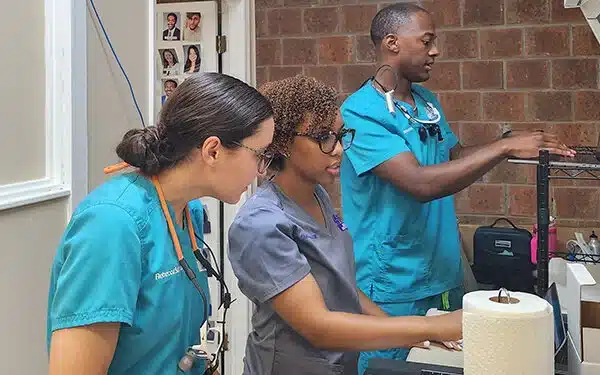
For the past two years, the School of Dental Medicine at East Carolina University has operated the Hyde County Outreach Clinic in the back of the Swan Quarter post office building. Students, residents, faculty and staff travel once a month from Greenville to care for patients in a county that currently has no practicing dentists. Burleson has sought care at the office since day one, getting a cleaning and routine follow-up care over the years. “It’s so nice having this so close to home,” she said, “and it’s awesome working with the students because you’re able to help with their education. All of this is helping Hyde County so much, too.”
The ECU dental school also has programs in place in Bertie and Jones counties to address oral health care in schoolchildren, creating a virtual triangle of care that encapsulates rural populations in critical need of dental care and services. These three county-based programs are making strides in reaching patients of all ages in some of North Carolina’s most underserved communities. “Our county-based programs are a testament to the dedication of our faculty, staff, students and residents to reach patients in rural areas where care is needed most,” said Dr. Greg Chadwick, dean of the ECU School of Dental Medicine. “The enthusiasm of our community partners and our patient bases also speaks volumes, validating that what we are doing is not only working, but also serves as a vital part of our school’s mission.” Just over two years ago, a ribbon was cut and a promise was kept.
Today, the Hyde County Outreach Clinic is bustling with patients and providers. Neighbors chat with neighbors while they await their appointments — “How’s the farming?” “How’s the family?” — and seasoned dentists introduce students and residents to the challenges and rewards of rural dentistry.
In 2019, the Anonymous Trust — a philanthropic group that aims to support rural and underserved communities — provided the School of Dental Medicine a grant award of $144,000 for portable dental equipment and personnel to launch the Hyde County Outreach Clinic.
In December 2022, the Hearst Foundations — national philanthropic resources for organizations working in the fields of culture, education, health and social services — approved funding in the amount of $100,000 for the school to provide dental care to underserved, uninsured and low-income rural patients. Portable dental equipment and special patient care funds will allow the school to provide high-quality dental care to North Carolina’s most medically underserved communities, beginning with the Hyde County clinic.
On a Friday in early August, the clinic’s internet was spotty. Without a secure connection, records and images couldn’t be accessed, and the day couldn’t begin. But where there is a problem and a group of dentists, there’s always a solution; usually, it’s an out-of-the-ordinary idea that withstands trial and error. Today is no different.
“That’s how it is, doing dental care in a rural community,” said Dr. Rob Tempel, the school’s associate dean for extramural clinical practices, as he and other providers finally made the vital internet connection. “It’s great for these students to have this kind of experience solving problems.” The experience students gain, he added, shows the level of dedication they have to serving their state now and as they graduate and embark on careers in dentistry. “It’s incredibly fulfilling to know that the students who are selected to attend this school continue to demonstrate and grow their passion to serve rural communities,” Tempel said. “Their positive energy continually refreshes us as faculty to see them genuinely want to do it.” Those fourth-year students are a part of something so much bigger.
Once a month on a Friday, the clinic provides care for anywhere from 15 to 25 patients. Since the clinic’s creation, close to 170 unique patients have undergone cleanings and procedures, keeping them close to home and bypassing the sacrifice of time and gasoline traveling to Greenville or dental offices in other counties. More than 120 dental students have traveled to Swan Quarter to provide care. The office has become part of Hyde County’s primary care team, bridging dentistry with overall health services, a key part of the School of Dental Medicine’s mission.
Fourth-year student Sydney Lewis said the opportunity to serve Hyde County comes during a rotation in the Ross Hall Service Learning Center on campus. “I have been anticipating being able to go to the Hyde County clinic since it was first started,” said Lewis. “I did a simple procedure on one patient that seemed small to me, but this patient told my faculty that their provider ‘must be a magician’ because their denture had not fit great in a while, but now it did. This made me so happy, and I will probably remember that forever.” Experiences like Lewis’s help solidify trust between patient and provider.
“Engaging with the local community helps students understand the importance of building trust and rapport with patients,” said fourth-year student Markus Mosley. “This relationship is crucial in rural settings where health care providers are often integral parts of the community. Participating in community-oriented service-learning projects helps students recognize the broader social determinants of health and the importance of public health initiatives.”
To Luana Gibbs, director of the Hyde County Health Department, the clinic is a partnership that also represents combining state and local resources for the good of the residents. “Vision, desire, support, collaboration and determination have been key,” she said. “First, there had to be the vision and desire to even attempt this type of service model, and I must give props to ECU for that. Multiple people with a passion to help our community have come together and succeeded in this partnership.” That collaboration includes ECU undergraduate students as well. Honors College student and public health major Aaron Mulkey has had the opportunity to observe procedures at the Hyde County clinic, shadowing providers and cementing his aspirations of dental school. “I love the hands-on approach to helping the community,” he said. “The commitment of the ECU dental school sparks passion in my mind.”
Fellow Honors College student and aspiring dentist Melony Grace Hodges serves as coordinator of the Hyde County clinic, gaining valuable insight on the business side of a dental practice. Many of the patients already know Hodges — she grew up a stone’s throw from the clinic and is vocal about her plans to return to her roots and provide oral health care to the community that raised her.
Burleson paused in the waiting area after her appointment and watched as Hodges checked other patients in and handled bills and phone calls. “I don’t know her very well,” Burleson said, “but I sure am proud of her. The dental school’s School-Based Oral Health Prevention Programs also ensure that similar homegrown smiles start out early in life.
Launched in Bertie County in 2019 through a $400,000 grant from the Duke Endowment and in Jones County in 2023, the program places ECU hygienists in select schools to provide oral health care and preventive education to children. The program offers comprehensive dental exams, X-rays, cleanings, fluoride varnish application and dental sealants to all public elementary and middle school children.
The Jones County program is jointly funded by the BlueCross BlueShield of North Carolina Foundation and the Duke Endowment; in addition to planning funding, the school received a $400,000 implementation grant in late 2022. For the past two years, the Delta Dental Foundation has provided a grant to offset the cost of care for uninsured children. The Bertie program is now self-sustaining through insurance, while Jones county’s is still grant-funded. Costs are also significantly reduced by the use of teledentistry, through which hygienists in the schools can connect with dentists on campus to discuss and diagnose cases.
“Seeing the students get more confident in their smiles and actually getting problems addressed is really rewarding for all of us,” said Rachel Stewart, dental hygienist and supervisor of the School-Based Oral Health Prevention Programs. Over time, Stewart has seen children become less apprehensive about receiving dental care, making it easier for parents to seek additional care in dental offices close to home. “Some of them do already have a lot of dental conditions and things going on, but we’re able to provide care in an environment where they’re already comfortable,” she said. “I think it lessens the anxiety, and now 99% of the time they’re excited.”
To date, more than 1,300 children have been served across Jones and Bertie counties, according to Stewart, including nearly 6,000 appointments during which more than 16,000 procedures were completed. Of the children served, 76% are on Medicaid — easing the challenges of patients connecting with Medicaid providers in rural counties — while 20% are uninsured and 4% have the cost of care covered privately. Most children enrolled in the programs are between 4 and 12 years old and range from kindergarten to 12th grade.
“The impact on the kids continuously grows as we are building relationships with the children, the schools, parents and community,” said Gina Hamilton, one of the school’s public health dental hygienists who cares for patients in Bertie County schools. “We are building trust and helping the children develop healthy habits.” The School-Based Oral Health Prevention Programs are also led by dental school faculty member and principal investigator Dr. Wanda Wright, along with faculty members Drs. Michael Webb and Vanessa Pardi.
“Most dental diseases are preventable, but many children unnecessarily suffer from dental disease because of lack of access to dental services and inadequate home care,” Wright said. “Poor oral health can have a detrimental effect on children’s performance at school and on their quality of life. Ensuring that students have preventive oral health services in school is important in helping them stay healthy and ready to learn.” Educational leaders in Bertie and Jones counties are also celebrating the strengthening collaborations. “This partnership is totally aligned with the district’s strategic plan as we try to ensure that our students have increased academic, social and emotional outcomes,” said Dr. Otis Smallwood, superintendent of Bertie County Schools. “Research tells us that poor oral health in students could lead to decreased academic outcomes, so we are very fortunate and proud of this partnership with ECU School of Dental Medicine.”
Pardi said the programs’ benefits extend to unique clinical experiences for students and exposure to potential careers for schoolchildren. The multi-dimensional benefits of the dental school’s county-based programs not only meet the school’s mission but stand to change the lives of all those involved — from patients young and old to dental students themselves. “Having grown up in a rural county, I’ve always felt a deep connection to these communities and knew that I wanted to give back by practicing in a similar setting, or ideally, in my hometown,” said fourth-year dental student Rebecca Sutton. “The Hyde County clinic provided me with my first experience providing care in a rural area, which was profoundly rewarding and solidified my passion for serving the place that shaped me.”
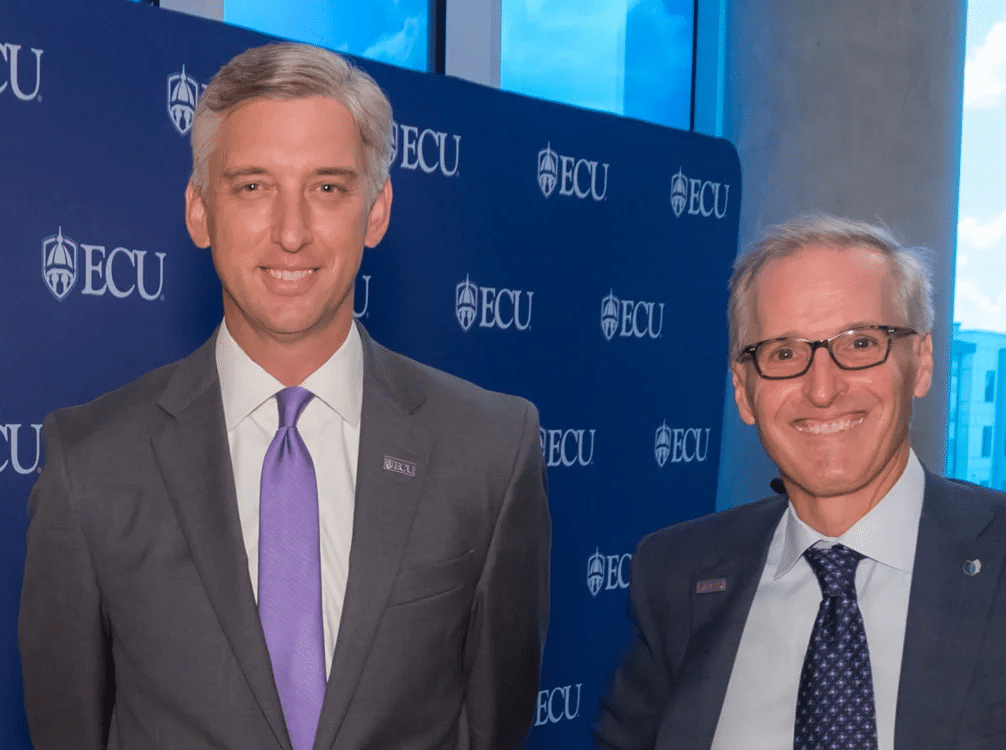
After a 50-year evolution, Vidant Health and East Carolina University (ECU) announced on June 23 that Vidant and ECU’s Brody School of Medicine (BSOM/Brody) would align to become a clinically integrated, academic health care organization. This integration will allow the two organizations to provide efficient, effective and high-quality care to eastern North Carolina residents, become the national model for academic rural health care and develop a shared brand.
As a first step toward this integration, Dr. Michael Waldrum was appointed Dean of the BSOM, effective July 1, while continuing to serve as Vidant’s chief executive officer.
The next step of this process is signing a Joint Operating Agreement (JOA) that allows the two organizations to work together to formalize the clinical integration, through unified operational processes and strategic goals while remaining legally separate entities. Employees of ECU and Vidant Health will remain employees of their respective organizations. More information is available on the Clinical Integration MyVidant page.
FAQs
Why is it important to integrate Vidant and the BSOM?
Vidant and BSOM are clinically integrating in order to:
- Improve the value of and the access to quality care and provide patients with a more streamlined health care experience.
- More efficiently use clinical staff across the combined operations, regardless of which organization employs them.
- Help to facilitate new strategies and interventions for the most prevalent health needs of eastern North Carolina.
- Create operational efficiencies reducing costs.
- Establish a shared leadership and governance structure for ECU Health.
What is the purpose of having Dr. Waldrum as the leader of both Vidant and BSOM?
With a single leader in both organizations, Dr. Waldrum has the ability and decision-making authority to implement unified operational and clinical decisions that lead to better outcomes for patients and communities served in eastern North Carolina. This integration helps both organizations meet the combined vision of becoming a national model for rural health care.
What does the JOA mean for the overall clinical integration process?
The JOA provides the legal framework that allows the two organizations to move forward with formalizing the clinical integration, through unified operational processes and strategic goals while remaining legally separate entities. The JOA also provides guiding principles, formal structures and grants certain authorities to achieve clinical integration between Vidant and BSOM.
Each of the JOA components (ECU, BSOM, Vidant Health, Vidant Medical Center, etc.) will maintain their corporate/legal existence. The JOA does not involve the transfer, sale or acquisition of Vidant or ECU assets.
The purpose of the JOA is to align clinical patient care efforts; further develop existing clinical integration for the benefit of patients; expand and develop the long-standing academic affiliation; and utilize revenues to sustain the patient care, education and research activities of all components of the JOA.
What is the difference between the JOA and the announcement in June 2021?
In June 2021, ECU Chancellor Rogers appointed Dr. Waldrum as dean of the BSOM, effective July 1. This announcement also included Vidant Health and ECU’s intention to move forward with a defined framework to achieve greater operational integration to complement its current clinical integration.
The signed JOA provides the legal framework and governance structure for the future ECU Health. The JOA explains how the organizations will operate as a unified system and Dr. Waldrum – as CEO/Dean – will make operational decisions to achieve integration.
Who approved the JOA?
The JOA between Vidant and ECU was approved by the ECU Board of Trustees on Nov. 12. This was the first step in the approval process. The Pitt County Board of Commissioners, Vidant Medical Center Board of Trustees, Vidant Health Board of Directors and the UNC Board of Governors will also review the JOA in the near future.
What has taken place since the announcement in June 2021?
Since the announcement of Dr. Waldrum’s new role as Dean of BSOM in June, an executive committee was formed with leaders from both organizations. The committee has been advising on the JOA components. They will continue to be responsible for overseeing and providing strategic guidance for the full clinical integration and creation of the future ECU Health. The committee has sub-committees reporting to it, concentrating on distinct areas such as clinical operations, finance, legal, marketing and communications.
What is the vision and future for ECU Health?
The work to fully integrate Vidant and BSOM clinical operations has been more than 40 years in the making. This work will continue in the weeks, months and years ahead. Leaders from both organizations will work with faculty, staff, patients and other stakeholders to elevate these two community-focused organizations under one brand – ECU Health – in a way that combines the strengths of both organizations with the goal of providing the most effective, high-quality and efficient care for patients and our communities throughout the region.
New Brand
Is Vidant’s name changing?
Once approved, the JOA becomes effective Jan. 1, 2022. Soon after, Vidant will change its name to ECU Health and rebrand itself throughout 2022. ECU Physicians and Vidant Medical Group will also be changing their names to align under the ECU Health brand.
The CEO and Dean roles are important roles for each organization. How will both organizations ensure that one person can do both roles effectively? What resources will be available to leadership to ensure we are successful in this unique situation?
Dr. Waldrum has a team at Vidant and at Brody to help manage the responsibilities. He reports to both the chancellor for the medical school’s interests and the Vidant Health Board of Directors for Vidant’s interests. As executive dean, Dr. Jason Higginson is responsible for the day-to-day operations of the BSOM. Similarly, Brian Floyd remains responsible for Vidant hospitals and Dan Drake will remain responsible for Vidant Medical Group (VMG) clinics. Once the JOA becomes effective, there will be a new Joint Operating Committee (JOC) with VH and ECU leaders that will provide ongoing advice, guidance and oversight to Dr. Waldrum in the management of ECU Health.
What is Dr. Waldrum’s role at Brody?
Dr. Waldrum represents the BSOM in internal and external matters including, but not limited to, chair of the Brody Council, board and committee meetings, medical school operation decisions, ceremonies, fundraising and academic conferences. At Brody, he reports to the university’s Chancellor. Through this shared leadership structure, Dr. Waldrum remains CEO of the health system.
Is ECU planning to build a new medical school?
ECU and Vidant are cautiously optimistic the NC General Assembly will include funding in its final state budget for the construction of a new medical education and research building on ECU’s Health Sciences Campus.
VH team members
Will Vidant team members become ECU state employees? Or, will ECU employees become Vidant team members?
No, there will be no change in employment status.
Will benefits change?
No, Vidant team member benefits will remain the same.
At BSOM, benefits will also remain the same, with the exception of small changes already planned and unrelated to the JOA starting Jan. 1, 2022.
Will roles or departments be consolidated between the organizations?
At this time, no decisions have been made to combine departments or areas. In the coming months, Dr. Waldrum will work with the JOC to determine how workflows will be organized going forward. This includes improving efficiencies and avoiding duplication across the organizations, which may include combining select non-clinical support services/departments.
Will Vidant team members be able to take on dual roles (working for ECU and Vidant)?
At the effective date of the approved JOA (Jan. 1, 2022), there are no changes to the current employment structure. We will communicate if decisions are made to offer a dual employment model to other positions in the organization.
Vidant Medical Group / ECU Physicians
Will VMG and ECU Physicians be combined?
The provider groups will remain two distinct organizations, operating under the ECU Health brand with shared leadership and shared services to support operations. This integration will be focused on the development and adoption of a high performing, clinically integrated set of multi-specialty services across sites of care that is physician led, professionally-managed and patient centric.
How will this be structured?
ECU Physicians and VMG will be led by shared leadership. VMG and ECU Physicians will share the same workflow processes and approach to work, incorporating consistent clinical evidence-based protocols and unified clinical expectations.
Who can I reach out to for additional questions?
Vidant team members, physicians and credentialed providers can send questions about the clinical integration to ClinicalIntegrati[email protected]. BSOM or ECUP physicians, faculty and staff can go to https://medicine.ecu.edu/feedback/ to submit questions.

The Brody School of Medicine at East Carolina University held its 10th annual Medical Education Day April 25, celebrating scholarship and innovation in medical education.
The event included podium and poster presentations and the popular “Shark Tank” program, during which student presenters have five minutes to pitch their in-progress research to an expert panel and receive feedback on how best to move their projects forward.
Medical Education Day is traditionally a gathering of leaders, educators, students and other scholars that aims to provide a forum for sharing educational innovations in curriculum and teaching, enhances understanding of new approaches in medical education and strengthening the network of Brody community members interested in promoting educational excellence.
“Today marks another significant milestone in our ongoing commitment to advancing medical education and enhancing the quality of health care delivery in eastern North Carolina and beyond,” said Dr. Lisa Domico, teaching assistant professor in Brody toxicology, during opening remarks. “Today we will not only recognize the achievements of our educators, researchers and learners but also remember our dedication to the Brody mission. Our mission drives innovation, excellence and continuous improvement in medical education.”
The keynote speaker was Dr. Andrew Southerland, the Harrison Distinguished Teaching Professor of Neurology and executive vice chair of the Department of Neurology at the University of Virginia Health/UVA Stroke Center. Southerland is a 2006 Brody graduate and was a Brody Scholar. He is the past recipient of an early career award from the American Heart Association/American Stroke Association (AHA/ASA) National Clinical Research Program and has served as principal investigator for numerous clinical studies in the field of stroke and cerebrovascular disease.
Southerland’s address was titled, “Teaching Clinical Diagnostic Reasoning in the Age of AI – Domo Arigato, Mr. Roboto.”
Southerland discussed how artificial intelligence (AI) — which he also called “augmented intelligence” — can improve health care while the importance of a doctor-patient relationship remains at the forefront. He detailed some commercial AI products that contribute to medical care and how they can improve patient and provider experiences.
“I became interested in how we as educators need to consider artificial intelligence when it comes to medical education for the next generation,” Southerland said.
Southerland noted specific examples of products and programs in AI can help physicians better care for their patients. Providers can use AI and build upon its benefits using critical thinking and existing expertise.
“This is what we as humans can do well and how we can think about AI as a way to oversee what it’s doing,” he said.
Students earned accolades for their work during the event. Second-year medical students Jacob Richardson and Alissa Davis won the Shark with the Biggest Bite award for their presentation “Utilization of Artificial Intelligence Image Generation Tools to Augment Mnemonics for Medical Students: Proof of Concept.”
Alexandra Doherty, fourth-year medical student, won the Outstanding Podium Presentation award for her presentation, “A Delphi Consensus Study for the Development of a Specialty-Focused Ultrasound Curriculum for Fourth-Year Medical Students.”
The first-place poster award went to K. Ryan Dickerson, fourth-year medical student and Medical Education and Teaching Scholar, for his project “Near-Peer Created Full Length Practice Laboratory Practicals in Gross Anatomy and Embryology: An Effective Method of Learning in the Anatomical Sciences.”
The second-place poster award went Arden Vessie, fourth-year medical student for her project “Peer-Led Medical Spanish Education: Effects on Interprofessional Student Functional Language Self-Efficacy.”
The third-place poster award went to Michael Kovasala, first-year medical student and Taylor A. Creech, first-year medical student, for their project “Interprofessional Near-Peer-Created Resources in Gross Anatomy: Medical Student Support and Perceived Impact on Emotional Well-Being.”

Dr. Michael Granet has provided more than patient care and dental instruction as an adjunct assistant professor at the East Carolina University School of Dental Medicine’s community service learning center (CSLC) in Brunswick County.
Through gifts totaling more than $100,000, Granet has invested in and helped the school obtain state-of-the-art equipment for the CSLC. Granet, the staff and dental students at the CSLC now have access to a cone beam computed tomography (CBCT)/panoramic X-ray unit, which provides 3D imaging; a TRIOS intraoral scanner and CoDiagnostix software; and a 3D printer. The cutting-edge equipment allows the care team to provide scans for dental imaging instead of having to take impressions.
“Technology is at the forefront of dental education now more than ever before, and Dr. Granet’s gift of this state-of-the-art equipment provides our students and residents with vital exposure to digital dentistry,” said Dr. Greg Chadwick, dean of the dental school. “This gift, coming from a part-time faculty member, leverages our ability to expand the scope of care for the communities we serve.”
Dr. Dianne Caprio, clinical assistant professor at ECU and director of dentistry at the Brunswick CSLC, said dentists can create a virtual model of patient’s teeth or print the model if needed. “Dentistry has gone digital, and we are just scratching the surface of all the possibilities,” Caprio said. “Having this equipment offers the students and residents an introduction to the digital dental world.”
Caprio said the new equipment allows staff the ability to design crowns, dentures and other prosthetics on the software and print them in the office. “We can plan for accurate placement of implants using the CBCT, TRIOS and the CoDiagnostix software by designing surgical guides and printing them in house,” she said.
Granet learned about the CSLC after moving to Wilmington from Maryland. He works at the center each Tuesday caring for patients’ periodontic and implant needs and serving as an instructor for the dental residents working there. “I made donations to the clinic so this equipment could be here and we could all use it and patients could benefit from it,” Granet said. “All I did was give the money. What I get back is much greater than the money I give. I am in a happy place when I get here (Brunswick CSLC) on Tuesday.”
Staff at the CSLC honored Granet for his support with a plaque at the center. Caprio said the upgrade in technology is important to the CSLC, but Granet’s “greatest gift is his time and dedication to teaching the residents and students.”
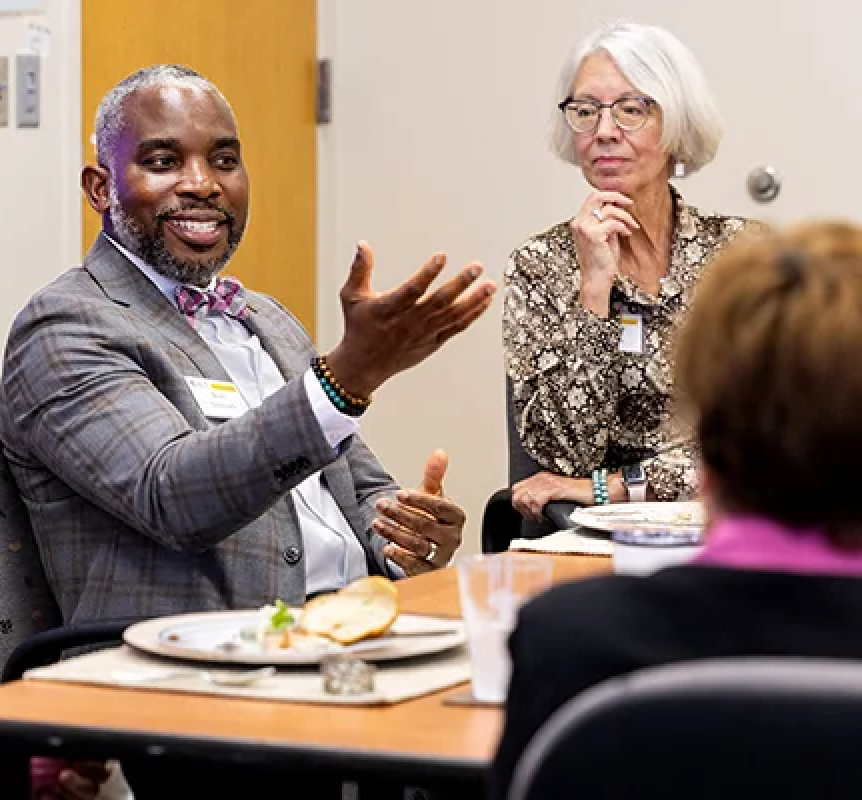
East Carolina University’s College of Nursing will have Service League Scholars among their Pirate nurses beginning in 2024-25 academic year thanks to a $1 million gift from the Service League of Greenville.
Service League Scholars will earn full tuition and fees for the academic year in which they receive the award. Two scholars will be named in the inaugural year.
“The Service League’s investment in Pirate nurses will make a meaningful impact on the health and well-being of our state and region. Through the Undergraduate Nursing Scholarship Endowment, the legacy and impact of the Service League will continue in perpetuity at ECU,” Chancellor Philip Rogers said. “The Service League is stitched into the very fabric of East Carolina University and ECU Health through 80 years of service and support of the medical center and the students who are educated at ECU. We are grateful they are dedicated to furthering our mission.”
The Service League of Greenville Undergraduate Nursing Scholarship Endowment was established by the league in honor and recognition of the nursing profession. It is one of the first major gifts made through the ECU Health Foundation, the philanthropic arm supporting ECU Health and ECU’s health sciences campus.
“It is fitting for the Service League endowment to be one of the first major gifts established through the ECU Health Foundation as it highlights the alignment of the health system and the university and our shared mission to benefit the well-being of eastern North Carolina,” said Scott Senatore, chief philanthropy officer, of the foundation. “The Service League is an outstanding community partner and a prime example of the relational bonds that connect ECU Health and the university. Their gift will further student success in the College of Nursing and outstanding patient care at ECU Health.”
The Service League is well known by anyone who has visited ECU Health Medical Center. The nonprofit manages three gift shops at ECU Health, coffee kiosks and vending machines throughout the medical center.
Supporting health care initiatives and the education of health care providers closely aligns with the Service League’s mission to promote interests among its members in the community’s social, medical, economic, cultural and civic conditions.
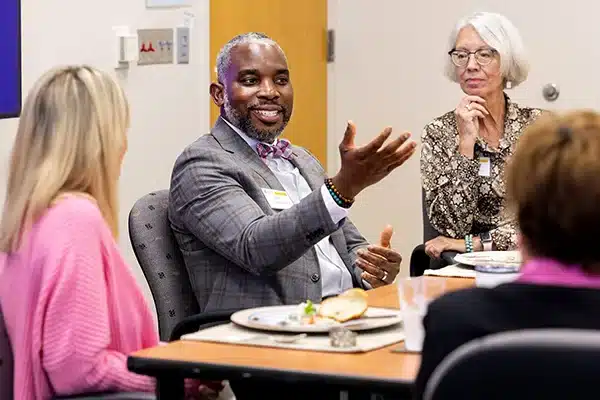
League President Wendy Farrior said the organization committed to supporting health care education in 2018 through an endowed scholarship for students enrolled in the ECU School of Dental Medicine, the College of Allied Health Sciences, the College of Nursing (CON) and the Brody School of Medicine. Since then, league members have realized the significant impact these scholarships have had on health care in eastern North Carolina, she said.
The Service League of Greenville Scholarship Endowment has funded more than $105,000 in scholarships to students. The original endowment will continue to provide scholarship support at Brody, the School of Dental Medicine and the College of Allied Health Sciences.
“Nurses have a special place in the heart of the league. The profession is well-represented in our membership and many remain active in their nursing careers,” Farrior said. “With this scholarship, the league hopes to encourage nursing students to practice in eastern North Carolina after graduation and thereby continue the league’s legacy of service and partnership with the hospital.”
Dr. Bimbola Akintade, dean of the College of Nursing, said scholarship investment is a significant part of the formula the college needs for continued success in the education of nurses.
“Your heart was in the right place when you made this (scholarship) decision,” Akintade said. “Our students are challenged in this program, and our standards are high. We produce the best nurses in North Carolina, and we’re competitive against any program in the country.”
Karen Gagnon, chair of the league’s scholarship committee, said the selection of the College of Nursing is a response to the national nursing shortage and because the CON represents the largest group of students within health care with the lowest scholarship support.
“For years, the college has prepared nurses to transform health care in North Carolina,” Gagnon said. “We hope to transform student lives by helping them graduate without the significant burden of loan debt and provide a connection between the recipients and ECU Health.”
The Service League of Greenville Undergraduate Nursing Scholarship Endowment will create the first full scholarship in the CON. Eligible students will have a demonstrated financial need, a 3.0 GPA or higher and a commitment to community service. Recipients are expected to be residents of eastern North Carolina, with first preference given to Pitt County residents.
Jeanne Martin, interim chair, baccalaureate nursing education department, said the need for scholarships is very real. Scholarships remove barriers for students who are putting themselves through the nursing program.
“This scholarship will pay dividends for a long, long time,” Martin said. “The need is real, and this is going to make a big difference.”
Proceeds from the league’s business within ECU Health have been used by the league to fund a wide variety of hospital equipment needs and capital projects. The organization’s members consider the scholarship endowments a natural extension of the league’s mission.
“The Service League has historically invested money into the bricks and mortar of the hospital,” Gagnon said. “It was time to bring the buildings to life.”